PAPERWORK
Hazmat and TankerBuilt for the load
Built for the load
that demands the right details.
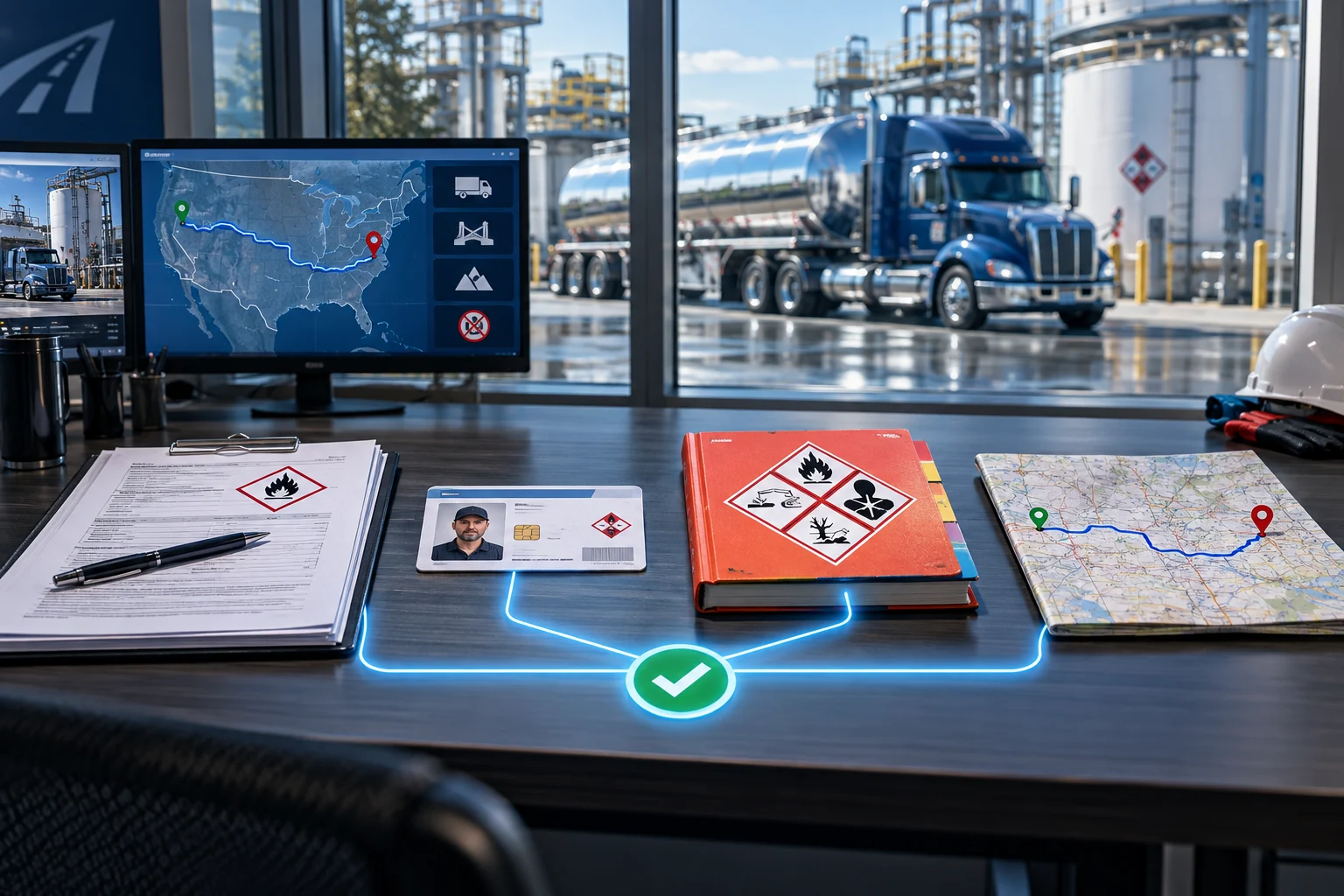
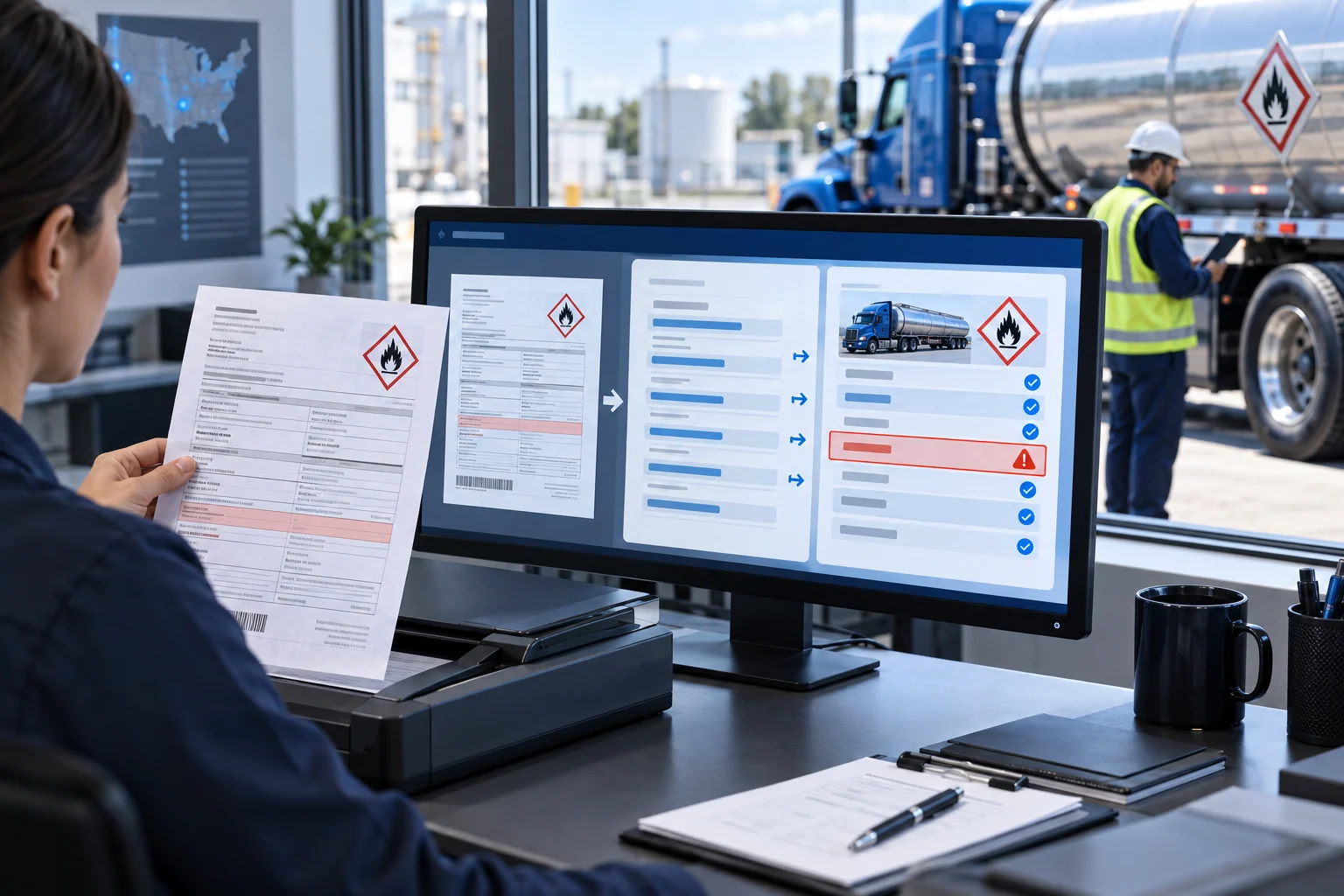
FleetPath checks hazardous-material shipping papers against the load, tracks driver endorsement dates, and plans routes using the material’s hazard class. Emergency reference information stays within reach, while your team remains responsible for safe operation.
Petroleum·Chemical·LPG·Cryogenic·Produced water
HAZMAT & TANKER LIFECYCLEFrom upload
From upload
to cleared.Every detail
accounted for.
✓ Verify critical shipping papers and endorsements✓ Confirm commodities, packaging, and placards✓ Validate routing against hazmat class & tunnel rules✓ Keep the right emergency info at driver’s fingertips
H: 06/06/2024
N: 06/06/2024
X: 06/06/2024
N: 06/06/2024
X: 06/06/2024
UN1203
Gasoline
Class 3
Gasoline
Class 3
1203
Tunnel: B
Route: Clear
Route: Clear
ROUTE
SIGNATURE
✓
The problemCHAPTER 01
Catch the mismatch before it becomes a bigger problem
Hazmat and tank work carries the paperwork, the credentials, and the routing rules that turn one missed detail into a violation. FleetPath checks all three before the truck rolls.
CapabilitiesCHAPTER 02
Four checks. One clearer dispatch decision.
Bring the papers, driver qualifications, emergency references, and route requirements together before departure.
How the shipping-paper check worksCHAPTER 03
From uploaded page to flagged mismatch
Built for tank and chemical fleetsCHAPTER 04
The right checks for what you carry
FleetPath stacks the base tank profile with the hazmat overlay and asks for exactly the credentials that combination requires.
Keep the next critical move inside the guardrails.
Bring the shipping papers, endorsements, route checks, and proof into one operating record.